
An idea that refused to sit still.
Concept · Creative Direction · Curation · Exhibition Design · Author
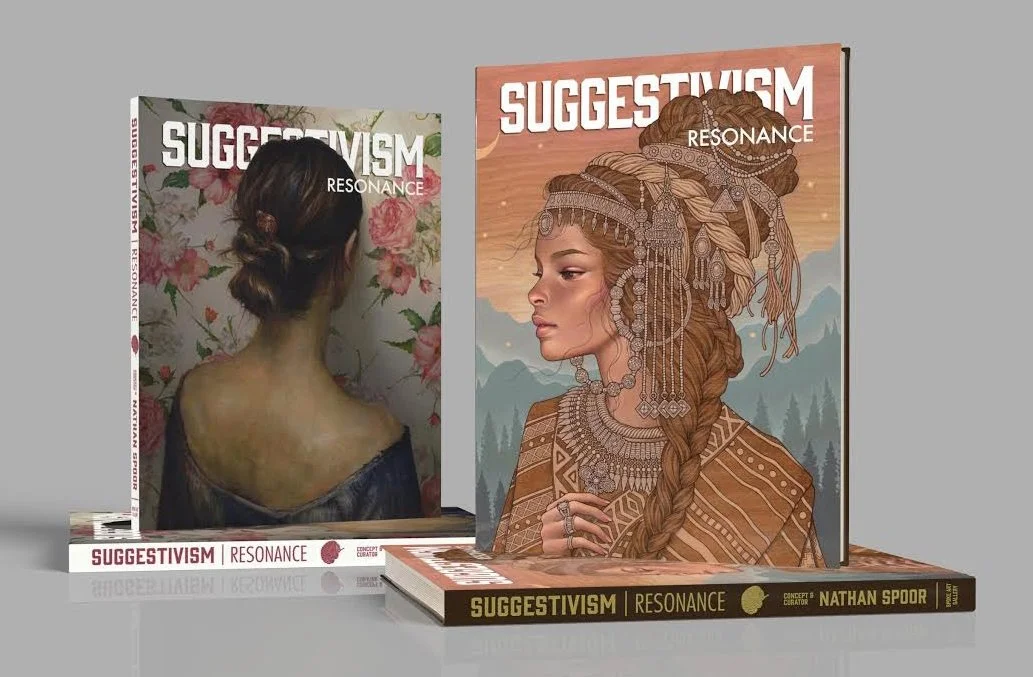
Suggestivism began as a question about my own paintings and grew into a curatorial platform for other artists. I brought together distinct creative voices through exhibitions, publications, and a shared visual identity. Resonance became part of that continuing exploration: how individual ways of seeing could connect through a larger body of work.
01 / ORIGIN
Naming the unnamed.
Suggestivism began in graduate school as an attempt to understand my own work. Existing definitions never quite fit. The images felt less like declarations than suggestions, ideas arriving through intuition, experience and imagination.
Years later, while researching the first publication, I discovered that the term had a history of its own. More than a century earlier, critic Sadakichi Hartmann had written about Suggestivism and artists pursuing interior vision and “a new ideal of beauty.” A personal question had unexpectedly revealed a much older thread.
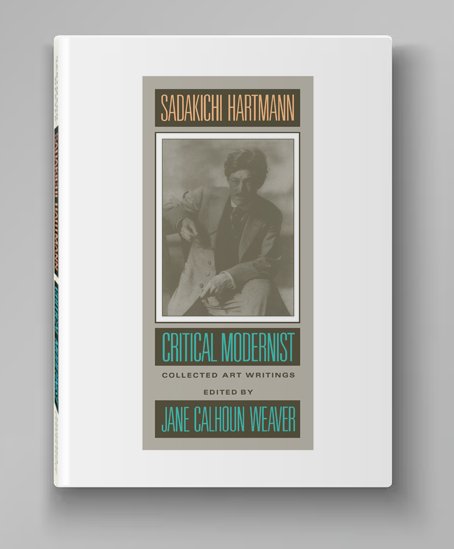
Historical reference: Sadakichi Hartmann’s collected writings in Critical Modernist (1991). I encountered his earlier use of “suggestivism” after years of independently exploring the idea in my own work.
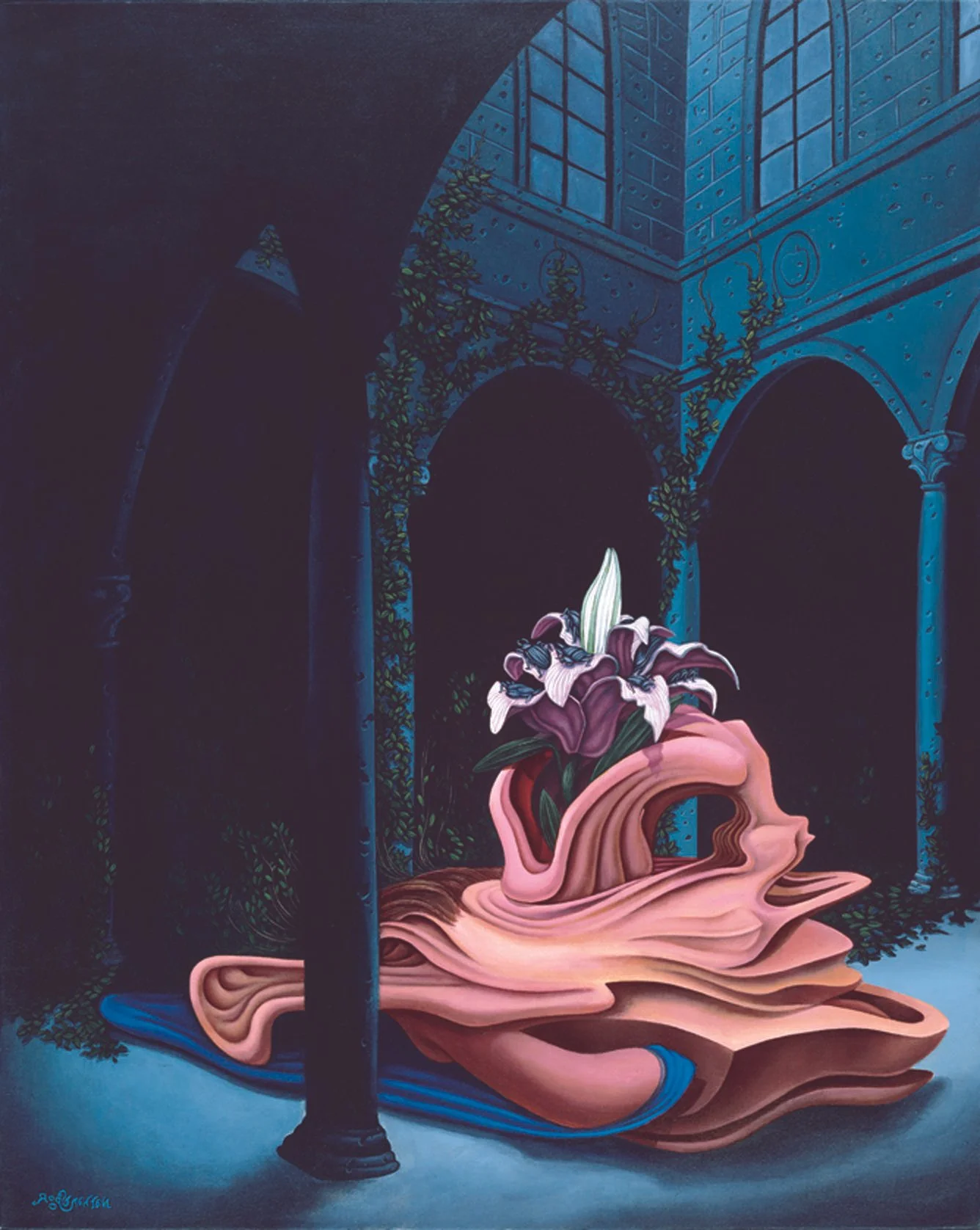
MFA thesis work, circa 1996. Painted roughly 15 years before I encountered Hartmann’s writing.
02 / CURATION
Distinct voices shaping a shared narrative.
The idea became more interesting when it moved beyond my own work. I began inviting artists not because they shared an aesthetic, but because their work carried an unmistakable sense of individual voice.
Curation became a way of testing the premise: bring together artists working with conviction and let the connections reveal themselves.
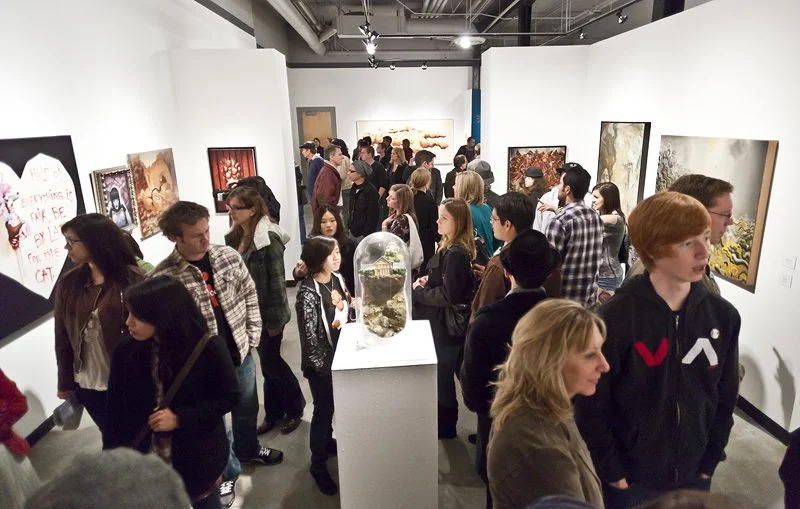
Opening night of the first Suggestivism exhibition, curated by Nathan Spoor. CSUF Grand Central Art Center, Santa Ana, February 5, 2011.
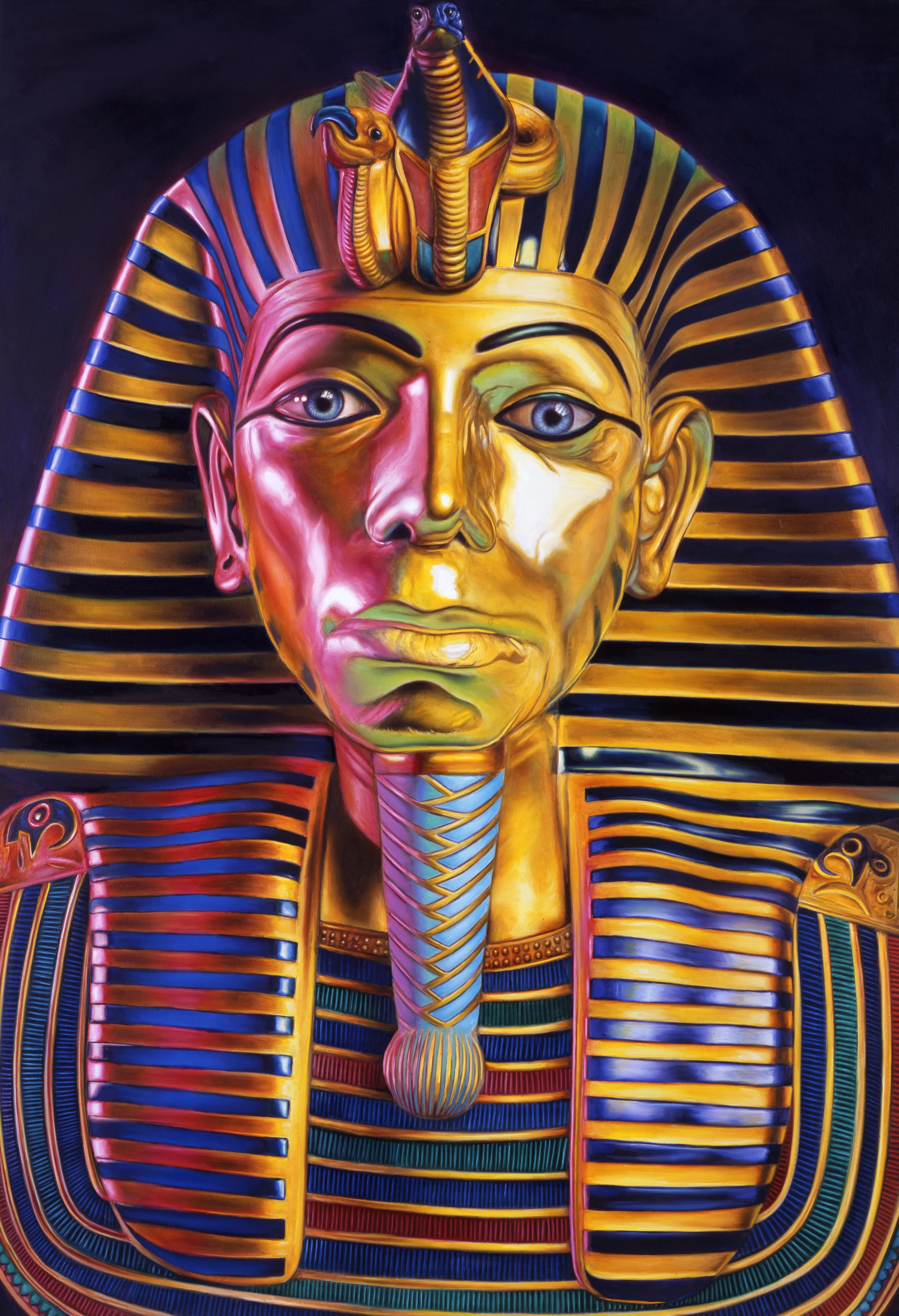
Ron English
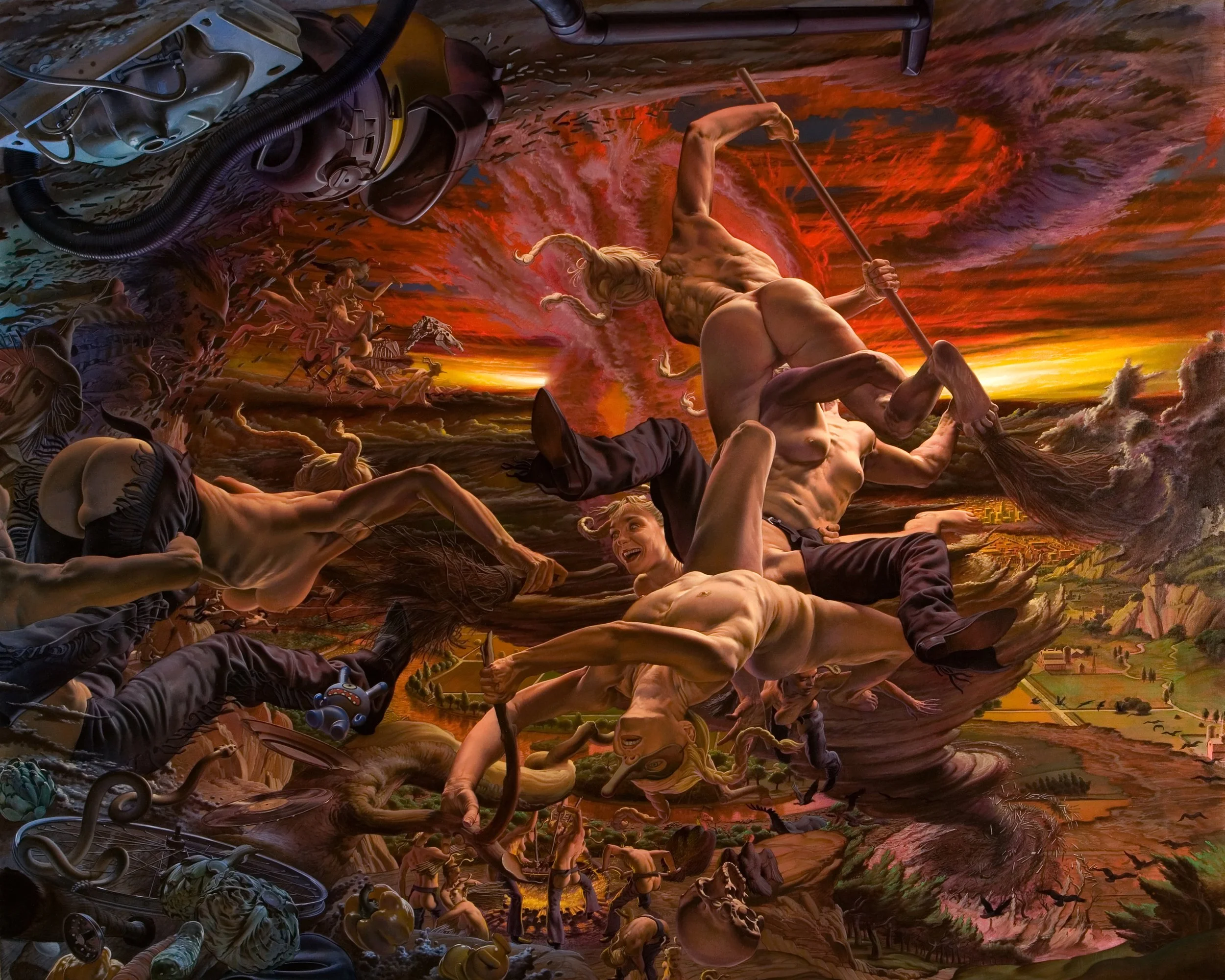
Nicola Verlato
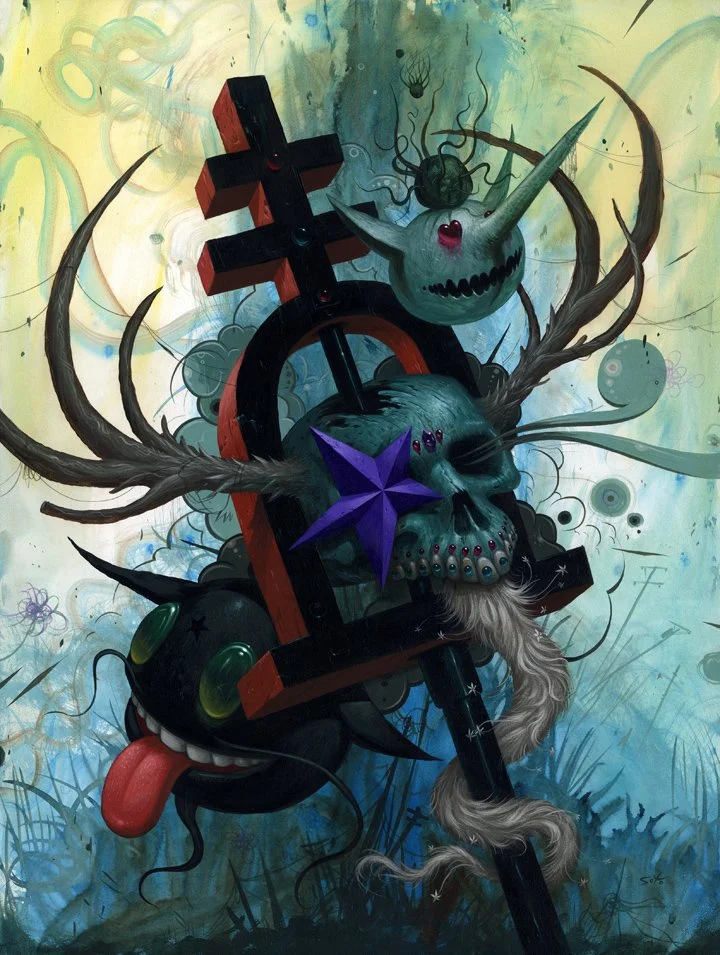
Jeff Soto
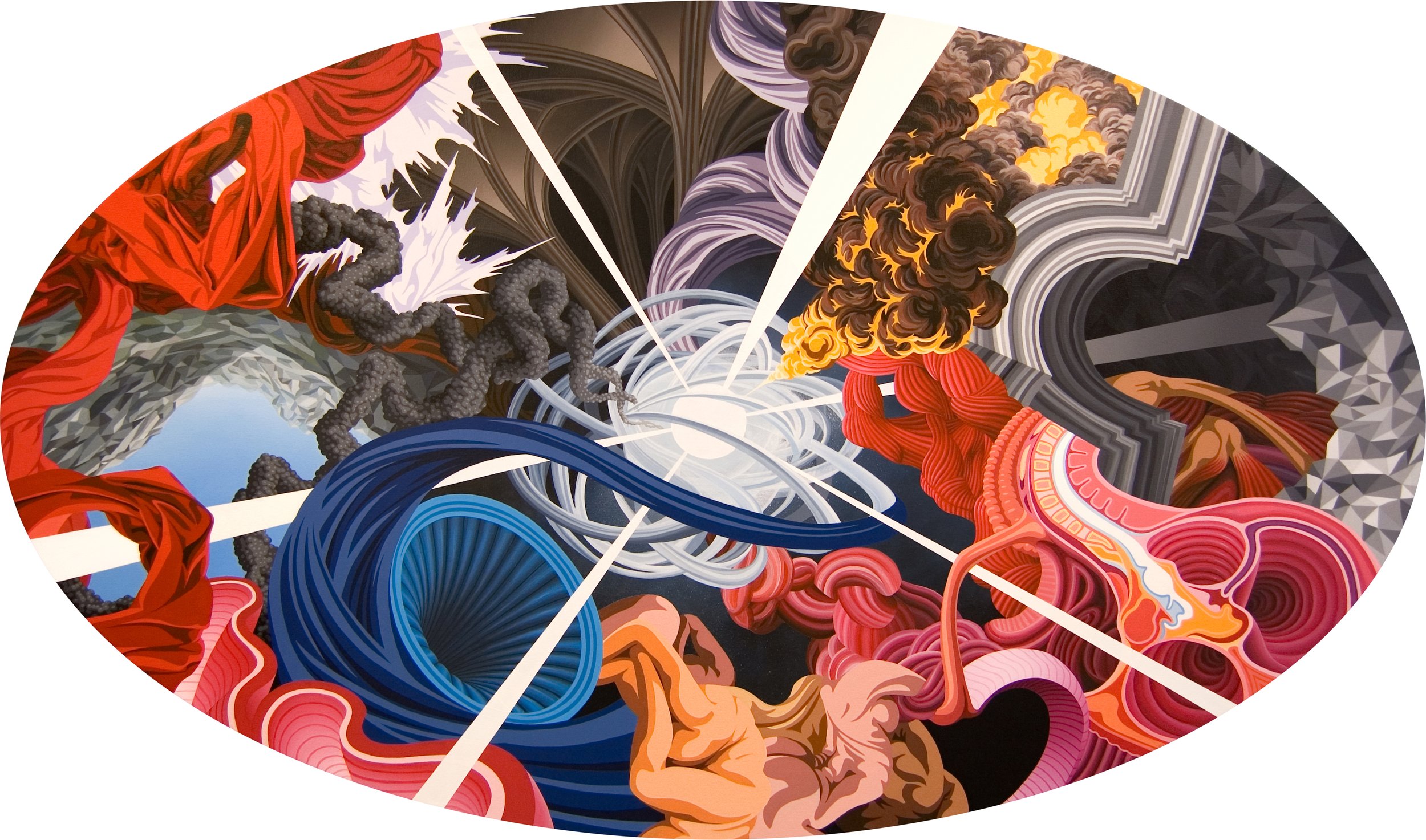
James Roper
03 / EXHIBITION
Into the room.
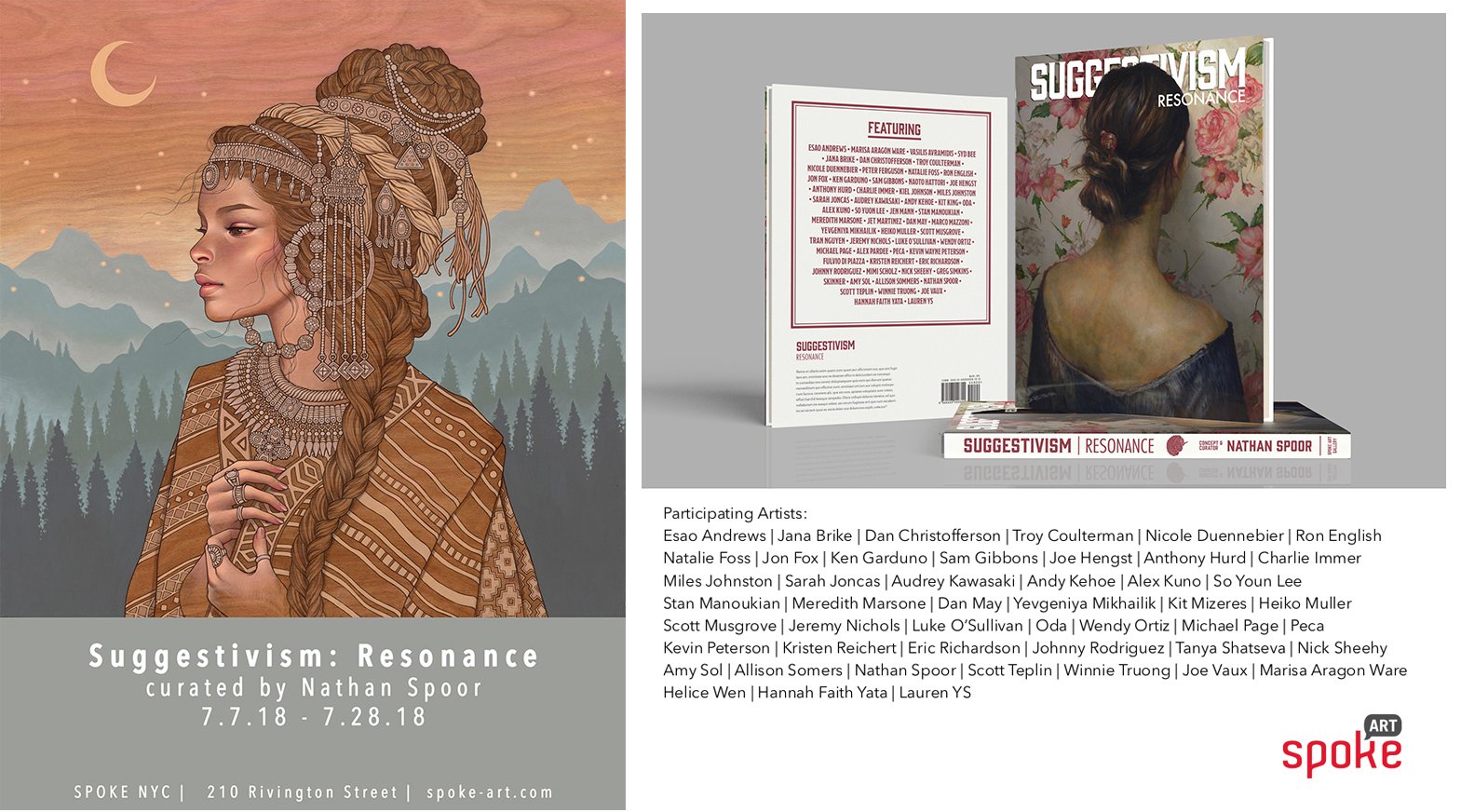
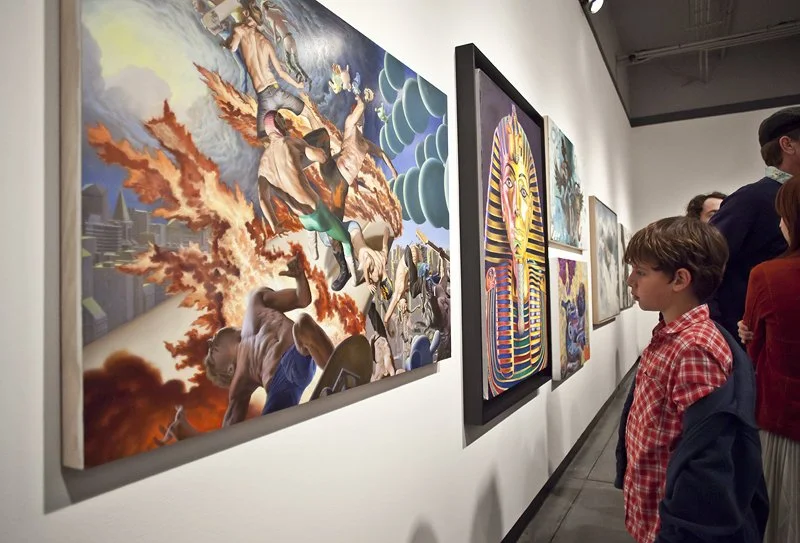
I extended the curatorial work into exhibition planning, gallery coordination, and supporting communications. Working with artists and galleries, I helped bring the idea into spaces where audiences could encounter the works together and make connections of their own.
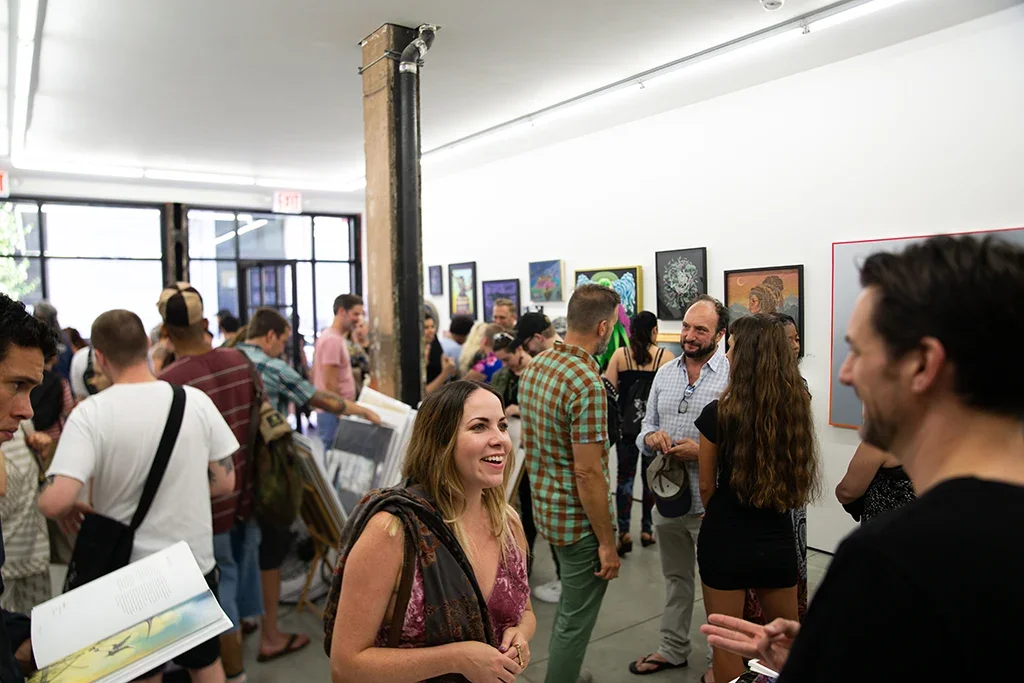
Opening night + book release: Suggestivism Resonance NY (2018)
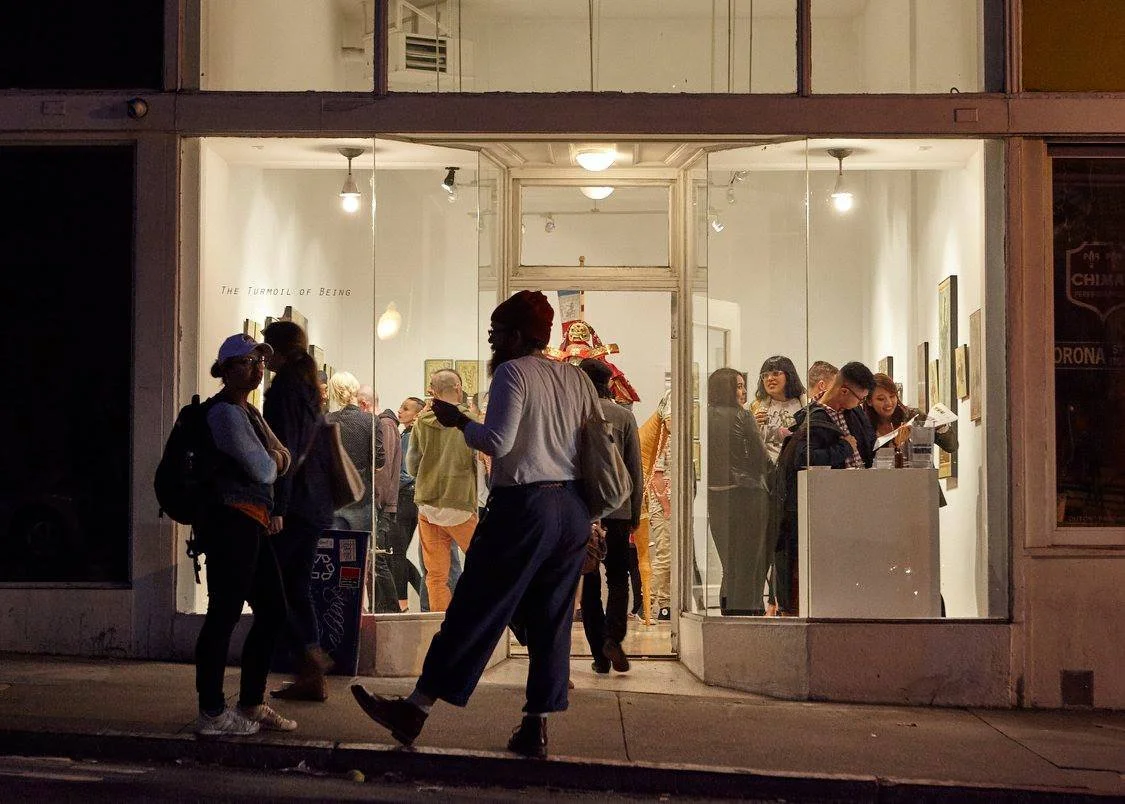
Opening night: Suggestivism Resonance SF (2016)
04 / IDENTITY
Making connection visible.
I developed the Resonance wordmark to mark the concept’s evolution across the San Francisco and New York exhibitions with Spoke Art, the book, and its marketing materials.
The brain and radiating burst gave the idea a visual form that carried into artist pins and the book’s opening pages. Gold typography connected print and online announcements, with a stronger gold treatment in printed materials.
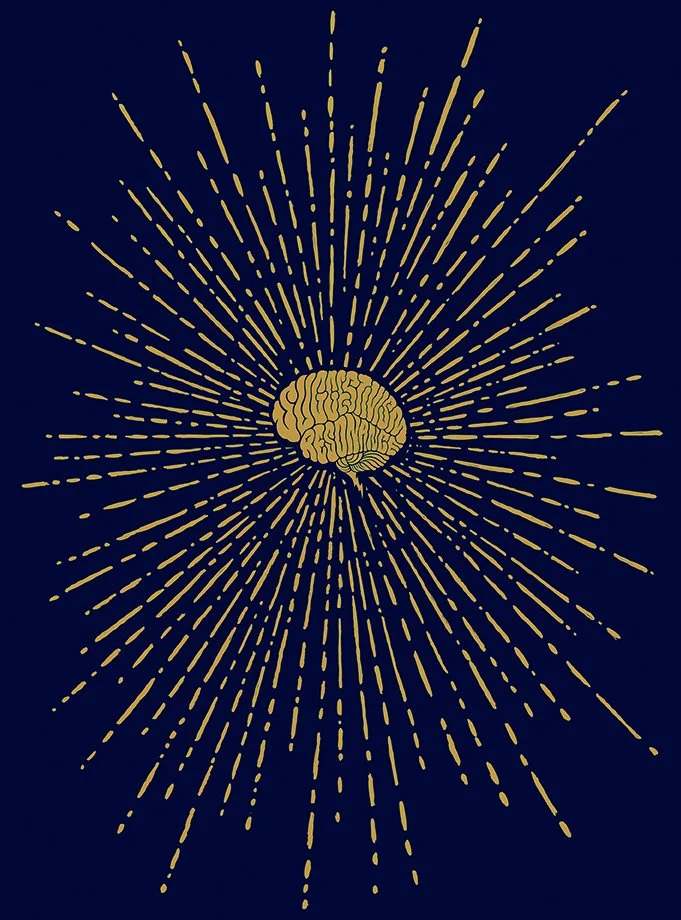
Brain and burst artwork developed for an enamel pin given to participating artists, available at the opening, and included with the limited-edition signed book.
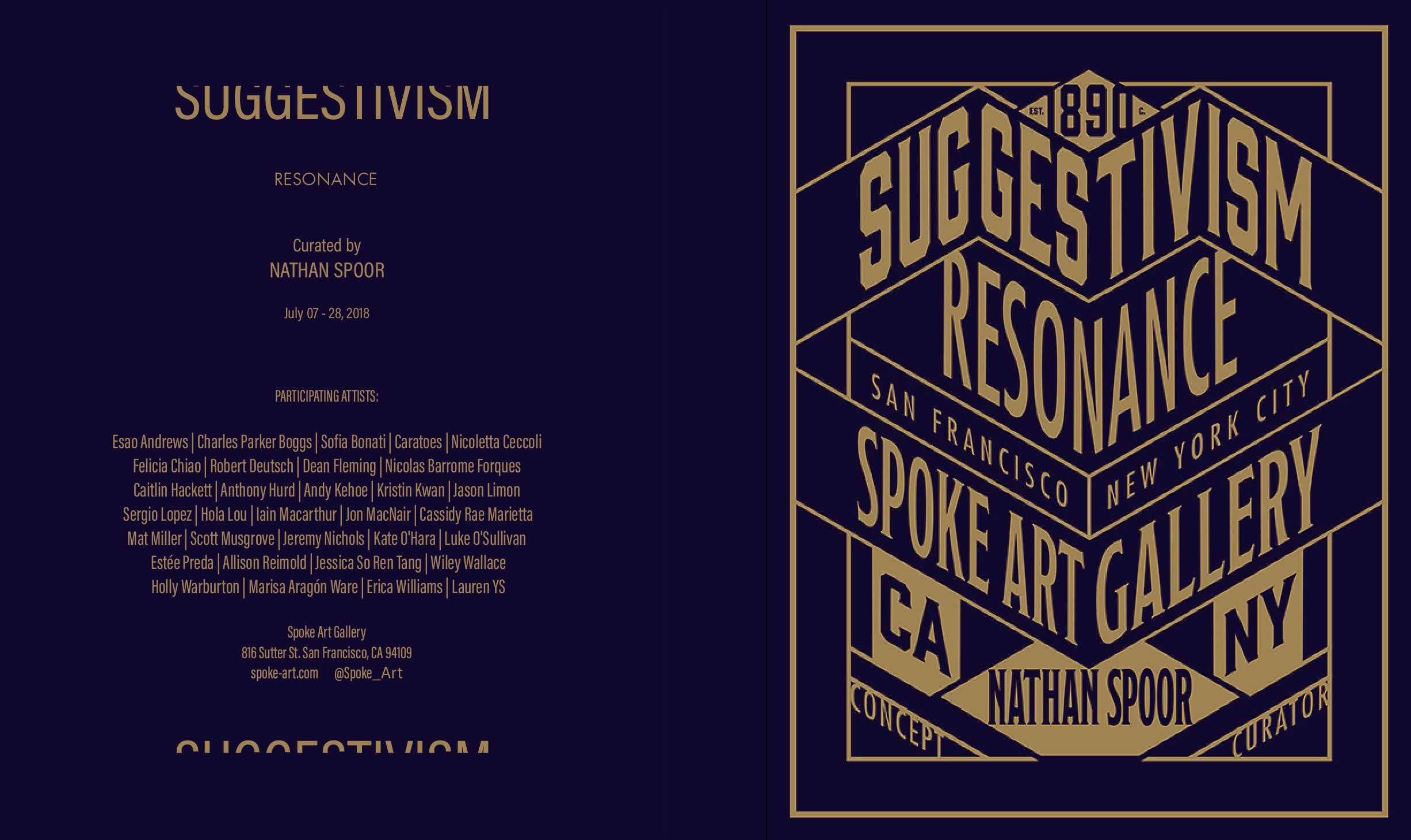
Gold typographic treatment for exhibition announcements across print and digital.
05 / BOOK
Beyond opening night.
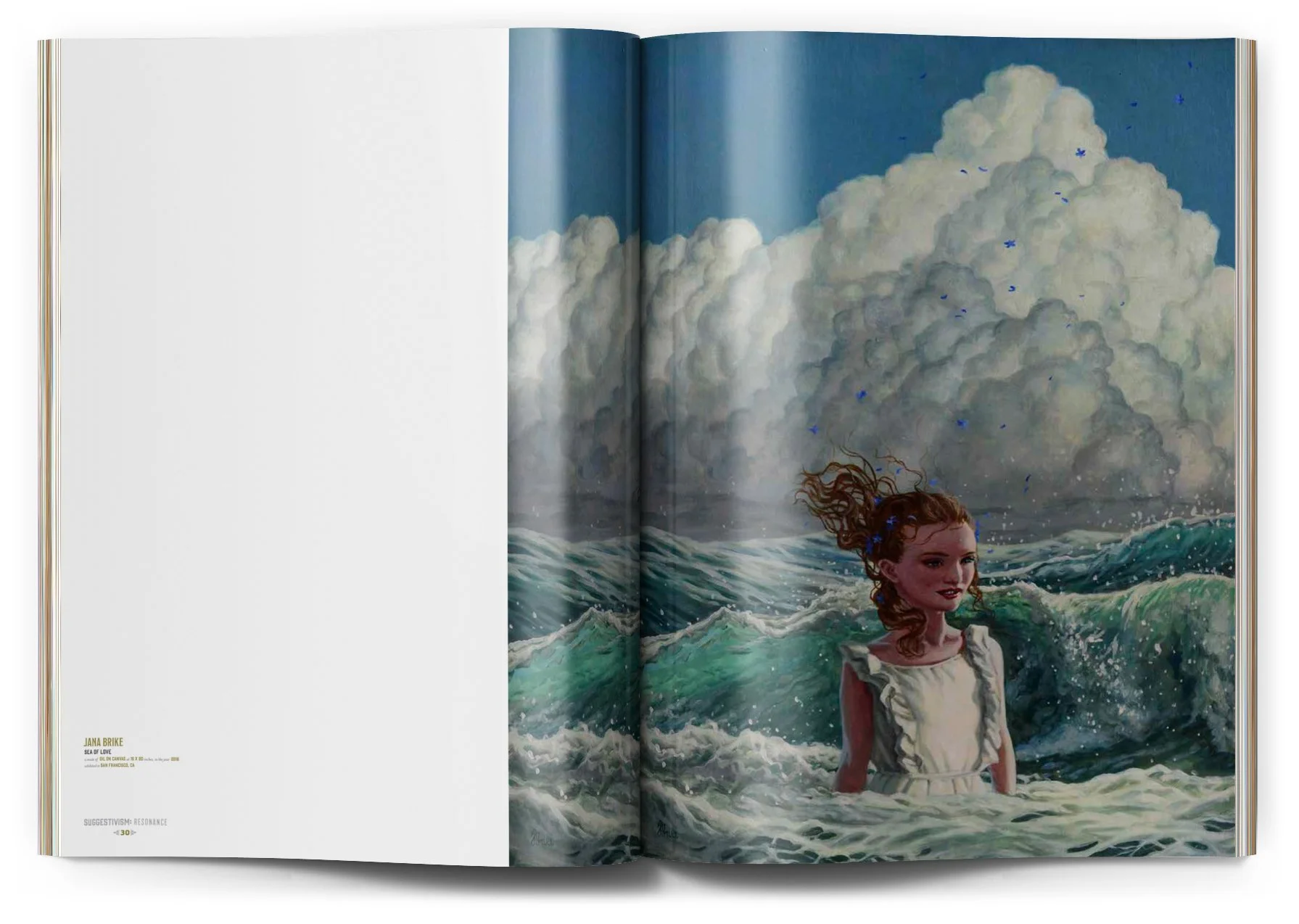
The books gave the exhibitions a life beyond the gallery. I brought writing, editorial structure, and artwork together to document the artists and carry the curatorial idea onto the page. Readers could return to individual works and explore the connections between them at their own pace.
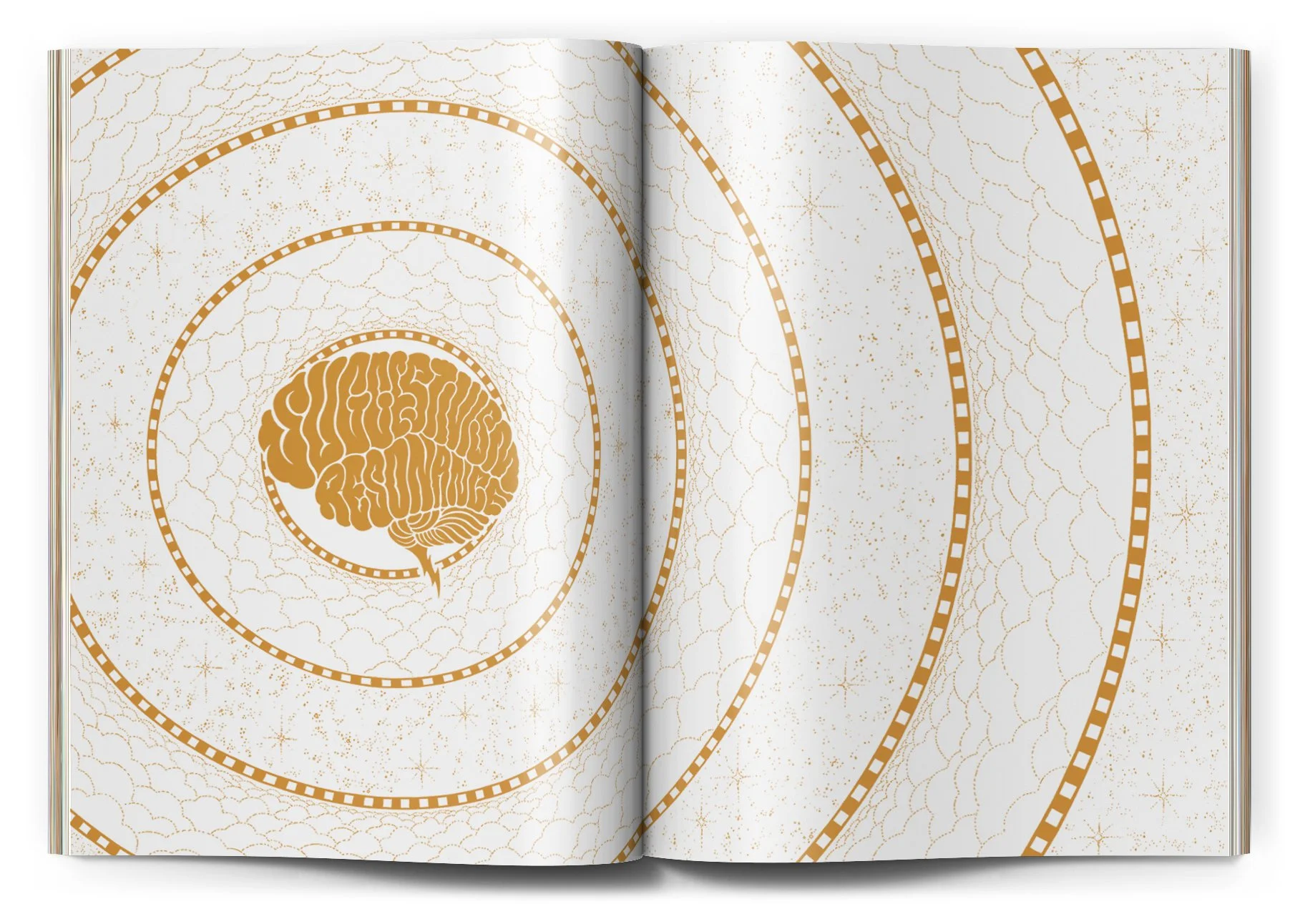
The brain and burst motif carried into the book’s opening pages.
06 / RESONANCE
And onward.
Suggestivism began with a question about my own work. Through other artists, exhibitions, and books, it became an invitation for others to look, interpret, and imagine. What happens next belongs to the viewer.
NATHAN SPOOR
CREATIVE DIRECTOR
